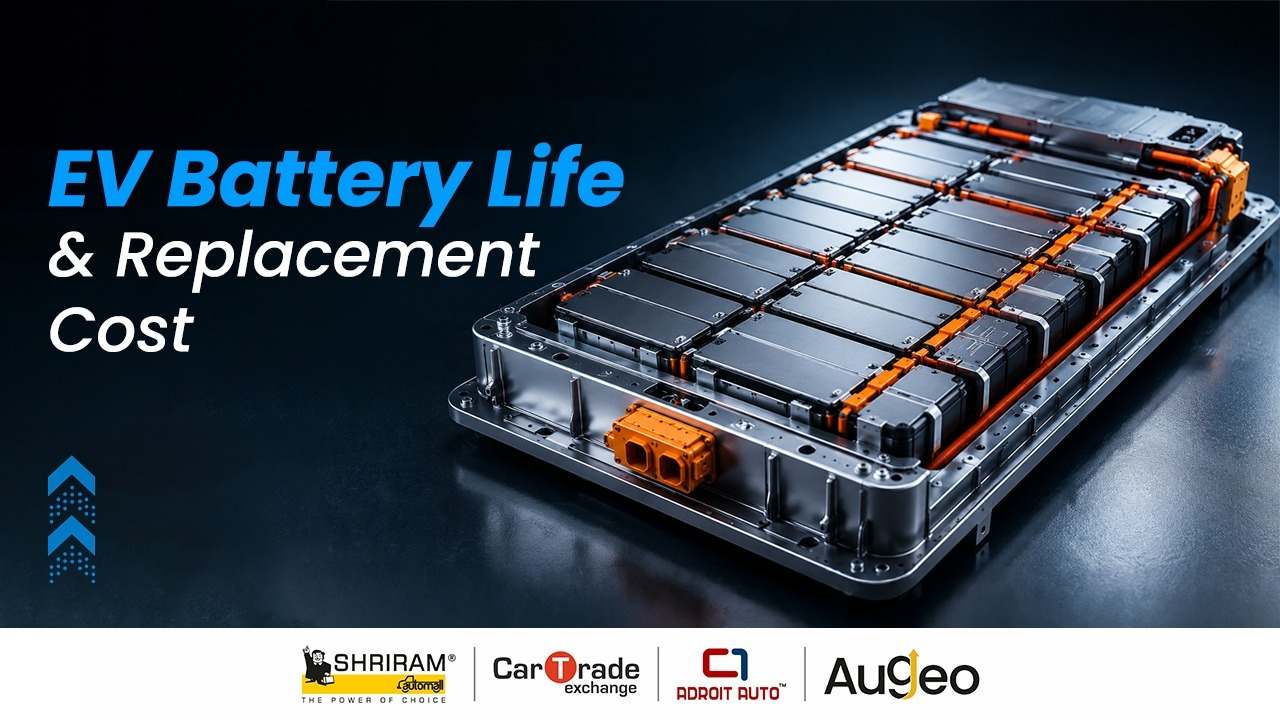
Electric Vehicle (EV) battery life is typically between 10 and 20 years, which is around 1,500 to 3,000 charge cycles. After this period, the EV Battery basically degrades to 70% capacity. The replacement cost of EV batteries for different vehicles ranges between 40,000 and 12 lakh. Depending on the type of vehicle and its model, the replacement cost of EV batteries can vary. Due to slow battery degradation and strong warranties, there is a low likelihood that anyone will need to replace their EV battery. But being aware of the replacement costs will help you make an informed and stress-free decision.
What is an EV Battery
An electric vehicle's battery is a large, rechargeable energy storage system powered by the vehicle's electric motors. This system helps the vehicle move without burning any fossil fuels. The heart of an EV is the battery, as it defines the cars driving range, acceleration capability, and charging speed. Electric vehicles run only with the help of one main asset, i.e., the battery. It supplies energy for the vehicles motor to propel, which then moves the vehicle forward.
Different types of batteries are used for different vehicle use cases. Let us look at the types of EV batteries used for specific cases:
- For daily city commuting and regular use, lithium iron phosphate (LFP) batteries are preferred.
- For long highway drives and longer distances, nickel manganese cobalt (NMC) batteries are preferred.
- For regions with hot climates and warmer weather, lithium iron phosphate (LFP) batteries are preferred.
- For users who prefer fast-charging, nickel manganese cobalt (NMC) batteries are preferred.
- For budget-focused buyers, lithium iron phosphate (LFP) batteries are preferred, and for premium buyers, nickel manganese cobalt (NMC) batteries are preferred.
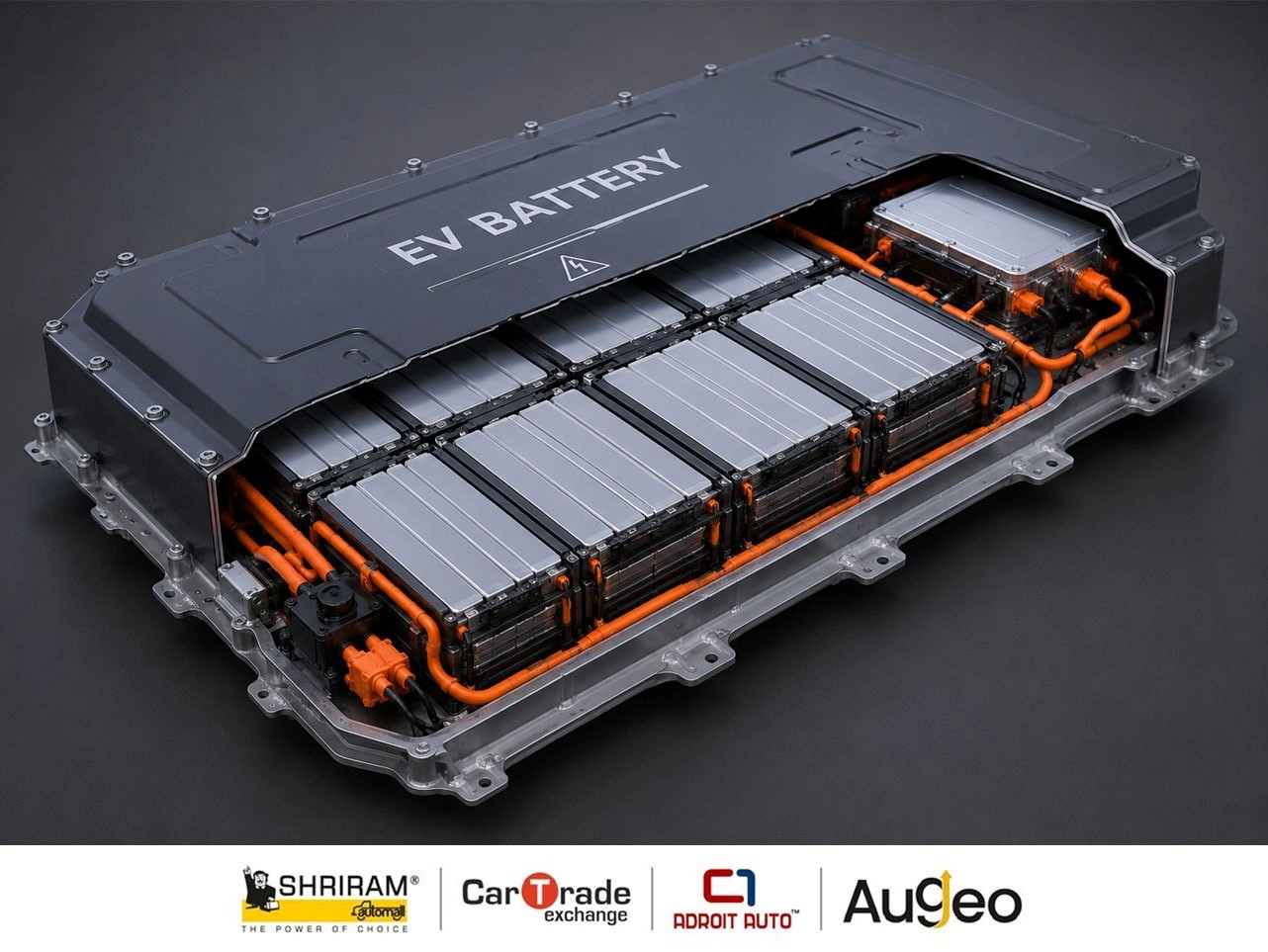
Working of an EV Battery
Traditional car batteries are designed only to give power to the engine to start the car, whereas EV batteries provide high-energy output for the propulsion of the engine, helping the car move forward. Let us see how the EV batteries work:
Process | What Happens? | Ion Movement | Energy Conversion | Result |
Discharging | While driving, an electrochemical reaction occurs inside the battery, releasing stored energy. | Ions move from the anode (negative electrode) to the cathode (positive electrode). | Chemical Energy Electrical Energy | Electricity is supplied to the electric motor, powering the vehicle. |
Charging | When connected to a power source, electricity reverses the electrochemical reaction. | Ions move back from the cathode (positive electrode) to the anode (negative electrode). | Electrical Energy Chemical Energy | The battery's stored energy is replenished and ready for use again. |
EV Battery Life
If you talk about kilometres, then EV battery life is roughly 2,50,000 km to 4,80,000 km, which is typically 12 to 20 years. Per year, the battery capacity degrades gradually by 1% to 2% with manufacturer warranties spanning 8 years. If the battery capacity degrades below 70%, then the automakers repair or replace the battery under warranty.
Factors Affecting EV Battery Life
Fast or frequent charging affects the life of the EV battery as the use of high-power DC accelerates battery degradation. Charging the battery to 100% or dropping it to 0% regularly puts more strain on the battery cells, which can affect the battery's health. To extend the life of the battery, charge it daily to 80% or less. Do not leave your EV standing in extreme heat or extreme cold regularly, as it can impact the capacity of the battery in the long run. Modern EVs do come with thermal liquid-cooled systems, but still, precaution can do no harm.
EV Battery Replacement Cost
Per kWh, the replacement cost of an EV battery in India can cost between 15,000 and 25,000. For e-scooters or two-wheelers, the replacement costs range from 40,000 to 1.1 lakh and from 3.5 Lakh to 12 Lakh for electric cars.
Category | Battery Capacity | Estimated Replacement Cost |
Electric Cars | Module-Level Replacement | 50,000 1.8 Lakh |
City EVs | 2530 kWh | 3.5 Lakh 6.5 Lakh |
Long-Range EVs | 5060 kWh | 8 Lakh 14 Lakh |
General EV Car Battery Cost | Per kWh (Approx.) | 3.5 Lakh 12 Lakh |
Electric Two-Wheelers |
Ola S1 Pro
| 45 kWh | 75,000 1.15 Lakh |
Ather 450 Series | 2.93.7 kWh | 55,000 85,000 |
Ola S1 X | 2 kWh | 40,000 55,000 |
General E-Scooter Battery Cost | Varies by model and range | 40,000 1.1 Lakh |
Note: Battery replacement costs vary by manufacturer, battery chemistry, labour charges, and service location. Most EV manufacturers offer battery warranties of up to 8 years or 1,60,000 km.
If youre looking to buy budget-friendly EV cars, then you can read this blog.
Conclusion
The use of electric vehicles is growing in India, and so is the need to understand EV battery life and EV battery replacement cost. The thought of EV battery replacement is seemingly expensive, but in reality, modern batteries are designed to last for many years. Some cars never need their batteries to get replaced, and the others that do are generally covered under warranty.
Knowing about EV battery life and replacement cost can help you maintain the life of your battery and not spend a ton of money. EVs are coming out as reliable, cost-effective, and sustainable, making them a smart choice for the future of transportation.
Frequently Asked Questions (FAQs)
1. How long does an EV battery last?
Most EV batteries last between 10 and 20 years or around 2.5 lakh to 4.8 lakh kilometres. Battery life depends on driving habits, charging patterns, and weather conditions.
2. What is the cost of replacing an EV battery in India?
EV battery replacement costs can range from 40,000 for some electric scooters to 12 lakh for high-capacity electric cars. The exact cost depends on the vehicle model and battery size.
3. Does fast charging reduce EV battery life?
Frequent use of fast charging can slightly increase battery degradation over time. For better battery health, it is recommended to use regular charging whenever possible and avoid charging to 100% every day.
4. Are EV batteries covered under warranty?
Yes. Most EV manufacturers offer battery warranties of up to 8 years or 1,60,000 km, protecting against major battery defects and excessive degradation.
 18001024141
 Download Our App